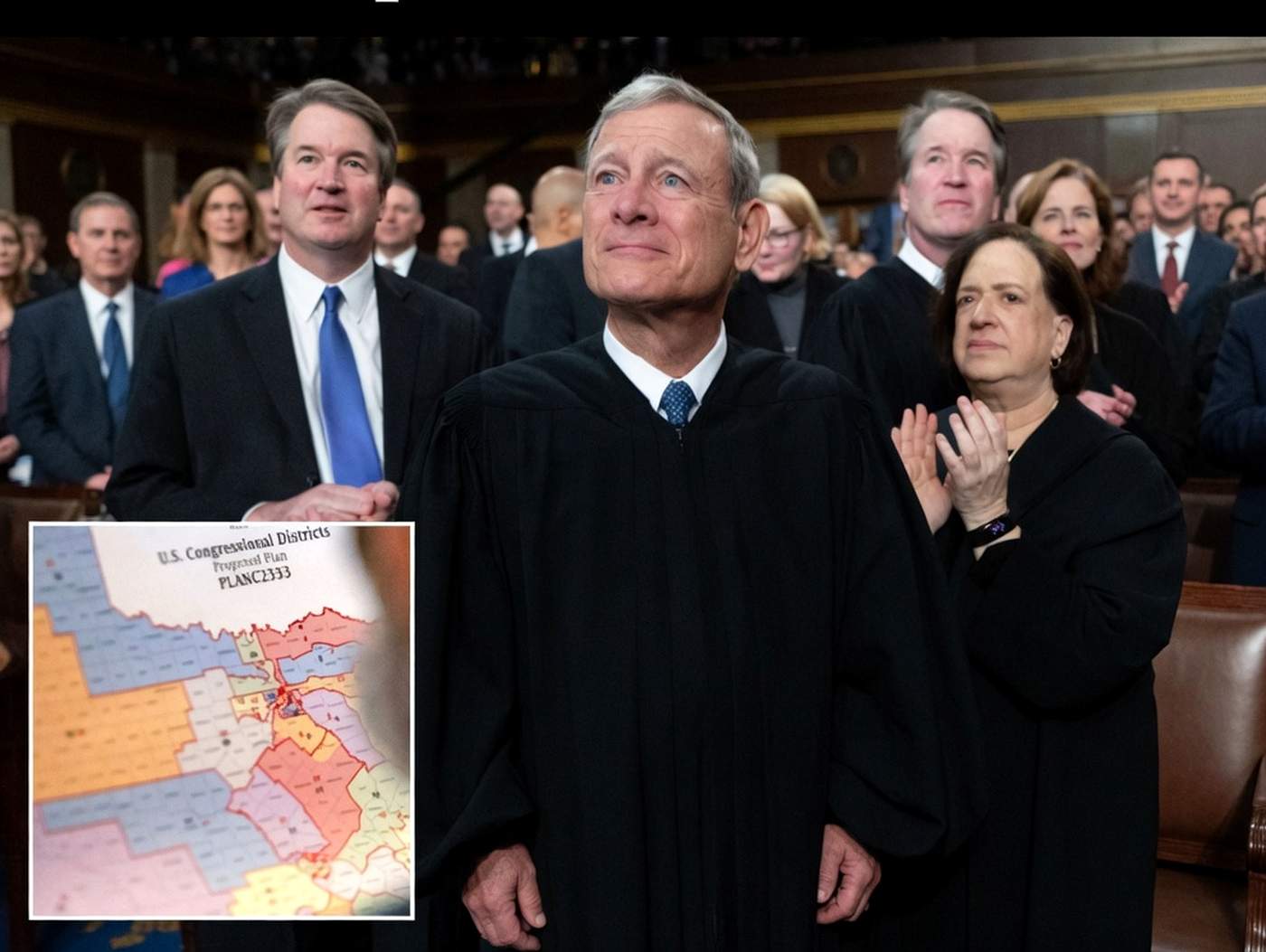
The Supreme Court gave the state’s map a temporary thumbs up in December and California’s map a temporary thumbs up in February. Both states led the way in the mid-cycle redistricting fights that are now happening all over the country. The Supreme Court’s approval of both states’ maps, which gave Republicans and Democrats five more seats, canceled out each other’s work before the 2026 midterm elections.
The Department of Justice also got involved, telling the Supreme Court to step in and change the decision. They said that Texas’ decision to change its map was based on “partisan objectives,” not racial ones, which could be against the Voting Rights Act.
The voting rights groups that sued Texas and Abbott said that the map was an illegal racial gerrymander. However, the Supreme Court ruled 6-3 on December 6 that the groups could not provide an alternative map that met Texas’ political needs.
Last year, Texas Governor Greg Abbott, a Republican, asked the Supreme Court to put a stop to a three-judge panel’s decision in the Western District of Texas that found 2-1 that race played too big of a role in its redraw This comes amid a redistricting battle across the nation ahead of November’s midterms.
The outcome could reshape the state’s political map and influence control of multiple seats in the U.S. House, several political analysts have predicted.
The dispute began after Virginia voters approved a referendum that would redraw congressional districts in a way that analysts say could heavily favor Democrats, potentially giving them an advantage in up to 10 of the state’s 11 districts
The dispute began after Virginia voters approved a referendum that would redraw congressional districts in a way that analysts say could heavily favor Democrats, potentially giving them an advantage in up to 10 of the state’s 11 districts.
The unsigned order from the high court said that the lower court should not have “interfered with an active primary campaign, causing a lot of confusion and upsetting the delicate balance between federal and state elections.” Hurley’s ruling marked the third time a court has found legal issues with the redistricting effort.
In his decision, the judge concluded that state lawmakers failed to follow required steps under Virginia law, including rules governing the timing of ballot measures relative to early voting periods.
The case now heads to the state’s highest court, where justices
The case now heads to the state’s highest court, where justices will consider whether the referendum complies with the Virginia Constitution and whether it was lawfully enacted.
A high-stakes legal fight over Virginia’s congressional map is intensifying as the Supreme Court of Virginia prepares to hear arguments on a voter-approved redistricting referendum that has already been blocked by a lower court The case has moved toward the Supreme Court, where oral arguments are scheduled to address multiple legal questions.
The Virginia Supreme Court had previously declined to intervene before the referendum vote took place, allowing the measure to proceed to voters.
Legal analysts suggested at the time that the court
Legal analysts suggested at the time that the court may have opted to wait for a fully developed legal challenge rather than act preemptively.