Senate Democrats’ delay tactics have come to an end, but Senate Republicans are still some distance from holding
a final vote on President Donald Trump’s “Big, Beautiful Bill.”
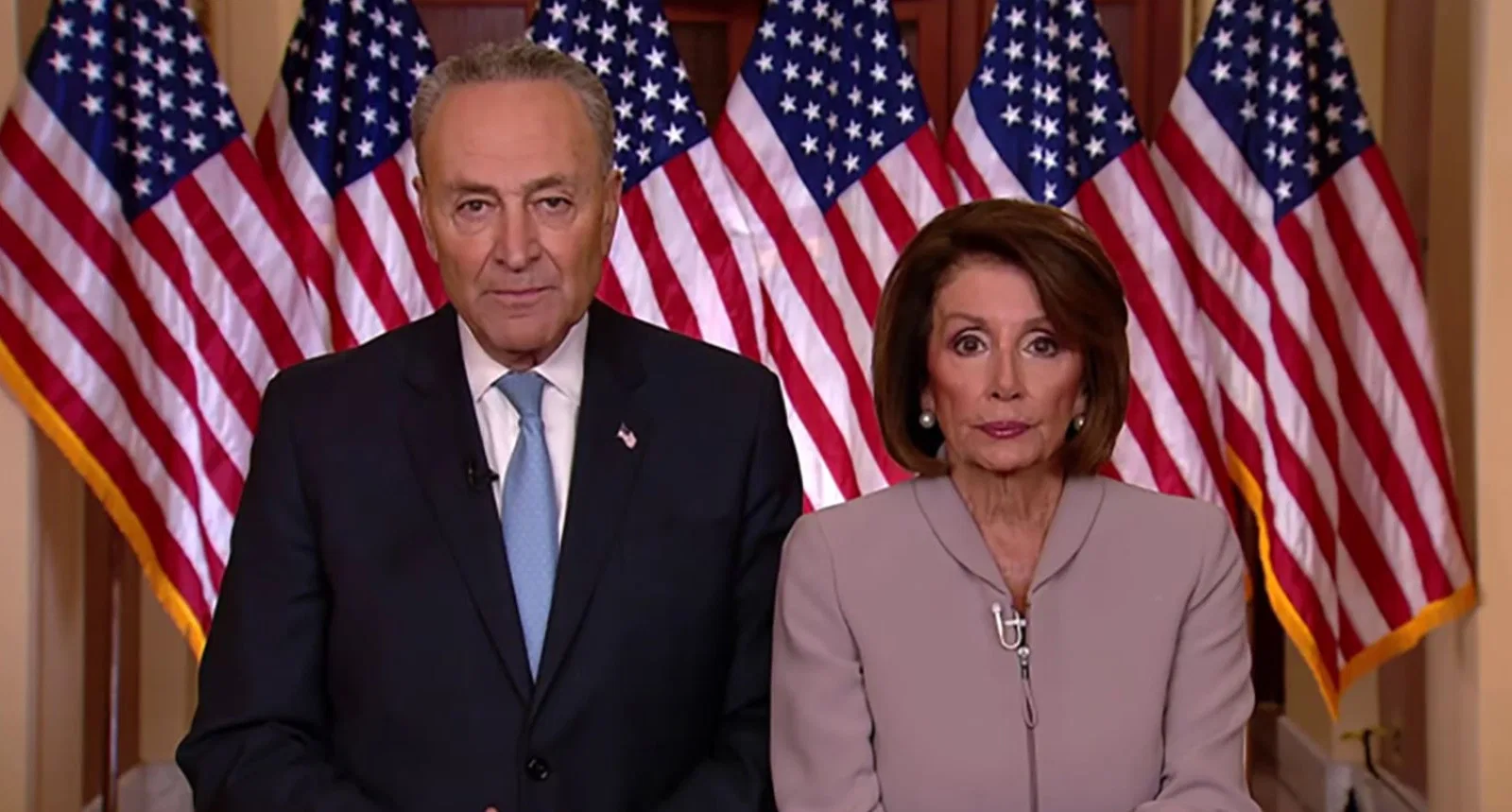
On Saturday, Senate Minority Leader Chuck Schumer (D-N.Y.) employed a procedural maneuver requiring Senate clerks to read aloud
the full text of the 940-page GOP-backed bill. The reading stretched well into Sunday, taking nearly 16 hours
to complete, Fox News reported.
Ahead of the ultimately successful—though contentious—procedural vote, Senate Minority Leader Chuck Schumer announced he would require clerks to
read the entire bill aloud. After the nearly 16-hour reading concluded, Schumer posted on X, saying, “Republicans are
squirming.”
“I know damn well they haven’t read the bill, so we’re going to make them,” he said, though
Democrats rarely read their own lengthy bills, lending some to criticize Schumer’s action as a political stunt.
It’s a rarely used tactic that Schumer and Senate Democrats employed as part of their broader strategy to
pressure Republicans, following the GOP’s continued refusal to seriously engage with much of President Trump’s legislative agenda.
The last time Senate clerks were required to read an entire bill on the floor was in 2021,
when Sen. Ron Johnson (R-Wis.) objected and demanded that then-President Joe Biden’s American Rescue Plan be read aloud,
Fox noted.
With the reading now complete, the Senate moves forward with 20 hours of debate, evenly divided between Democrats
and Republicans. Senate Democrats are expected to use their full allotment, while Republicans are likely to use only
a few hours.
Much of the GOP’s debate time will be taken up by critics of the bill, such as Sen.
Rand Paul (R-Ky.), whose support for final passage remains doubtful. However, Senate Majority Leader John Thune (R-S.D.) may
have more than just Paul to contend with as the process unfolds.
Sen. Thom Tillis (R-N.C.) is unlikely to reverse his position and support the bill’s final passage—despite public criticism
from President Trump and the threat of a primary challenger—unless significant changes are made to the Medicaid provisions
in the legislation.
Tillis reinforced his opposition by announcing he would retire at the end of his term, choosing to avoid
what could be a tough primary fight.
Meanwhile, Sen. Susan Collins (R-Maine), who backed the bill in the initial procedural vote, has also called for
meaningful revisions, specifically to the Medicaid provider tax rate.
Then there are the fiscal hawks, who delayed Saturday night’s vote while negotiating with Thune—assisted by Vice President
JD Vance—to secure an amendment addressing the Federal Medical Assistance Percentage (FMAP), which determines how much the federal
government contributes to each state’s Medicaid program.
Adjustments to FMAP remain unpopular among most Senate Republicans, except for a bloc of fiscal conservatives pushing for
deeper spending cuts in the massive legislation.
Trump hailed the passage of his “Big, Beautiful Bill” following a marathon four-hour vote in the Senate that
will now allow the measure to advance for debate.
Johnson (R-Wis.), who notably changed his vote from ‘no’ to ‘yes,’ stated that the massive bill represents a
“necessary first step” toward fiscal sustainability and addressing the challenges left by the Biden administration.
“Biden and the Democrats left behind enormous messes that we are trying to clean up – an open
border, wars, and massive deficits,” Johnson said. “After working for weeks with President Trump and his highly capable
economic team, I am convinced that he views this as a necessary first step and will support my
efforts to help put America on a path to fiscal sustainability.”
The vote was 51-49 along party lines, with only Sens. Tillis and Paul (R-Ky.) voting in opposition. Republicans
have a 53-47 seat majority in the chamber.