Sen. John Kennedy (R-LA) is urging Republicans to pursue a dramatic procedural shift to pass the SAVE America
Act — by using budget reconciliation to bypass a Democratic filibuster and approve the bill with a simple
majority.
Under current plans, Senate Majority Leader John Thune has scheduled the SAVE America Act for consideration as standard
legislation, meaning it would require 60 votes to invoke cloture and overcome a filibuster. With Republicans holding 53
seats, at least seven Democrats would need to join them.
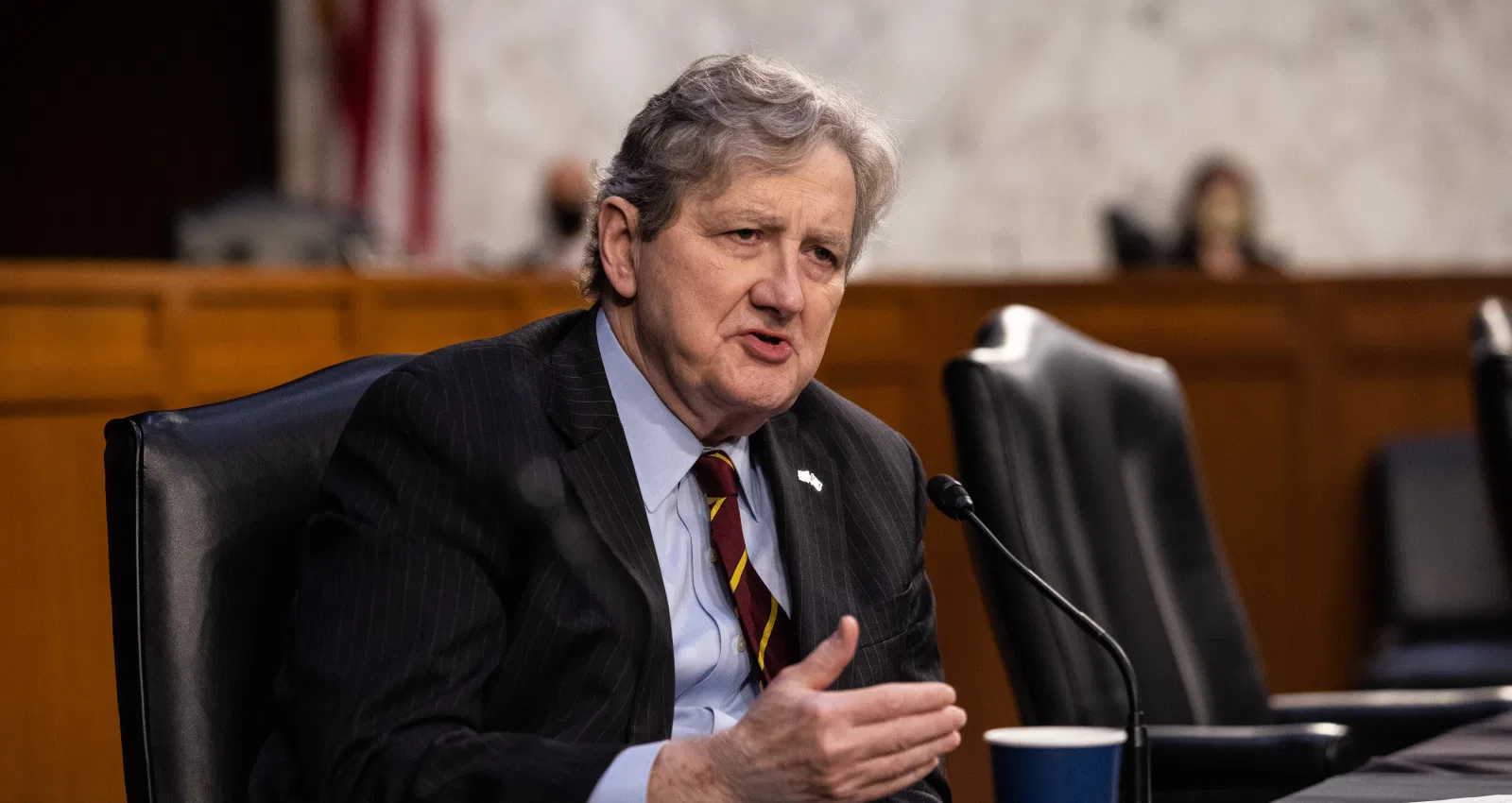
Kennedy argues that approach is unnecessary. Speaking on the Senate floor, Kennedy said Republicans should attempt to pass
the measure through reconciliation — a parliamentary process created under the Congressional Budget Act of 1974 that allows
certain budget-related legislation to pass with just 50 votes plus the vice president.
That means, if structured properly, the bill could pass with unified Republican support and a tie-breaking vote from
Vice President JD Vance.
“That’s how we passed the one big, beautiful bill,” Kennedy said, referencing prior GOP legislation enacted over Democratic
opposition. He also noted that Democrats used reconciliation in 2021 to pass the $1.9 trillion American Rescue Plan
on a party-line vote.
Kennedy acknowledged that reconciliation is not simple.
“Anything you propose through reconciliation has to be paid for. We can find the money,” he said. “And
anything you pass through reconciliation has to conform with the contours of the Budget Control Act. We call
that giving a provision a Byrd bath.”
The so-called Byrd Rule limits reconciliation to provisions directly tied to federal spending, revenue, or the debt limit.
Measures considered “extraneous” — meaning their budgetary impact is merely incidental to policy changes — can be struck
by the Senate parliamentarian.
“Our parliamentarian decides what passes muster under the Budget Control Act and what doesn’t,” Kennedy said.
He urged Republican leadership to enlist legal experts to draft a version of the SAVE Act that could
survive what he described as the “Byrd bath.”
“We have yet to try going to these smart lawyers … and saying, ‘Craft us a SAVE Act
that will pass muster under the Budget Control Act and can be blessed by the parliamentarian,’” Kennedy said.
Some senators have expressed skepticism that the bill’s election-policy provisions could qualify under reconciliation rules. Kennedy pushed back
on that pessimism.
“I’ve been here 10 years. I’ve seen things pass muster — survive a Byrd bath — that I
didn’t think had a hope in hell,” he said. “And I’ve seen provisions fail … that I thought
were slam dunks.”
“You don’t know until you try,” he added.
The SAVE America Act, supported by President Donald Trump, would require proof of U.S. citizenship to register to
vote in federal elections, mandate photo identification at polling places, and restrict mail-in ballots to specific circumstances such
as military service, illness, disability, or travel.
Conservatives argue the bill is essential to restoring public trust in elections. Critics say documented cases of non-citizen
voting are rare and warn that stricter requirements could burden eligible voters.
Frustration among Republican activists has grown as the bill faces procedural hurdles. Last year, when the Senate parliamentarian
ruled against a Medicaid-related provision in a separate GOP bill, some conservative leaders criticized the unelected official’s influence
over legislative outcomes.
Kennedy stopped short of calling for rule changes or removal of the parliamentarian, instead emphasizing that the Senate
should test the limits of reconciliation before conceding defeat.
“If this bill is as important as everybody says it is — and I think it is, because
we’re not just talking about voting, we’re talking about the confidence, the trust of the American people in
our elections — we should try it through reconciliation,” he said.
Whether leadership adopts Kennedy’s strategy remains uncertain. But his proposal signals escalating pressure within the Republican conference to
use every available procedural tool to advance the administration’s election-integrity agenda — even if it means reshaping the
legislative battlefield.